
Posts about The internet
The internet plays a huge role in my life, from a place to share photos and videos, to a career, to a means of communication linking me to friends and family all over the world.
Don’t do speculative work for web clients
Published in
Would you invest your time, experience and effort to do your job when there was a potential that your client or boss wouldn’t pay you for it?
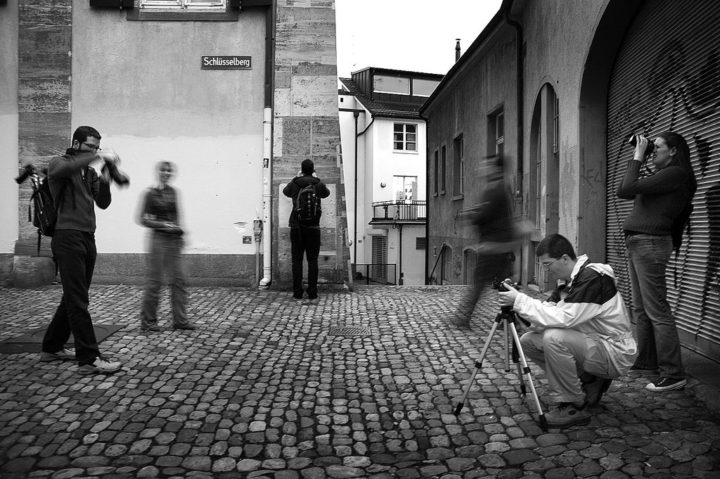
Ten years at Flickr
Published in
A brief history of ten years using the online photo-sharing service Flickr.
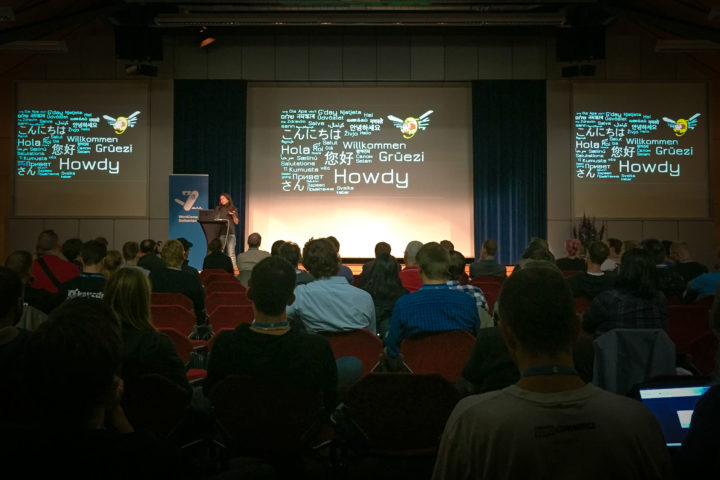
WordCamp Switzerland 2015
Published in
Lessons learned and presentations seen at this year’s WordPress conference in Zurich.
SEO für WordPress
Published in
Zusammenfassung der Themen bezüglich SEO, die wir gestern an ein WordPress-Meetup in Bern besprochen haben.
Reusability thanks to modular coding
Published in
My erstwhile mentor in Brienz taught me throughout our years working together that if a website functionality is worth creating, it’s worth creating so that it can be used in more than one project. Programme once, install many times. This is a credo I’ve maintained since I started programming for content management systems and one…

I’m not a fan of one-page websites, as a rule. But making sure that they load as quickly as possible goes a long way to making them acceptable.

“The fold” is still very important in web design
Published in
Website visitors can and do scroll the page to find what they’re looking for. That doesn’t make this scrolling action a good user interface design solution.
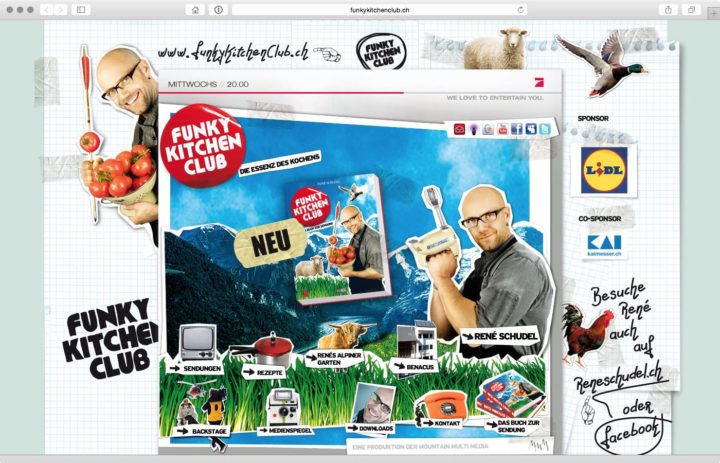
Funky Kitchen Club website
Published in
Remembering my work in 2008 on Swiss t.v.’s Funky Kitchen Club.
Facebook implemented Open Graph tags a long time ago, so that links from blogs and websites automatically pull in preview images and a summary text. That helps the viewer to see more about the linked page without having to click through. Twitter Cards does the same thing for Twitter. I’ve been lax and only just recently
The tourism organization for Lake Lucerne has just launched a great-looking new website. Modern design, nice typography, beautiful pictures and a simple navigation all add to the experience. But one small improvement could be made by adding a few simple lines of code to the .htaccess file: making sure that visitors to the site automatically

Containers and modules in web design
Published in
Using modules in front end web programming to allow more flexibility and more independence from site layouts for content elements.
Avoiding specificity issues in CSS
Published in
Holy moly. What a discussion we’ve gotten into over on Twitter about CSS specificity, BEM, and inheritance. I wrote yesterday that the idea is flawed and tries to work around problems which aren’t actually problems at all, but part of the language of CSS. As Duncan noted: the problem is actually, “people write bad CSS”. Dirk from
Disabling persistent MySQL connections in TYPO3
Published in
TYPO3 occasionally throws the following error message when attempting to connect to the MySQL database, blocking the operation of the website. The error also occurs when reporting is set to Production mode in the install tool. Uncaught TYPO3 Exception: #1: PHP Warning: mysqli::real_connect(): (HY000/1040): Too many connections in […]/typo3_src-6.2.13/typo3/sysext/core/Classes/Database/DatabaseConnection.php line 1199 | TYPO3\CMS\Core\Error\Exception thrown in file[…]/typo3_src-6.2.13/typo3/sysext/core/Classes/Error/ErrorHandler.php
Why using BEM for your CSS is a bad idea
Published in
I came across the BEM (Block, Element, Modifier) technique for CSS coding today. On reading half a dozen basic introductions to the technique, I saw immediately that the concept is based on weak coding principles, not code simplicity and reusability.
It’s all about content – open data and the web
Published in
When coming up with ideas for new websites or coming up with a use for a new design idea, the reason for the website or app is often on which slows the initial impetus for a designer or front-end coder. Sure, you have this great idea for a design, but what to use it for?
A website is never finished
Published in
You start off with an idea, progress it to a concept, make a design, fiddle with it for too long, then turn it into a working prototype. If all goes well, then you’re in for a couple more rounds of revisions and improvements, then the site gets filled with content and you launch the site.
