During our time in the Lake District in 2024, I did a lone hike to the top of the fell which I’ve been driving past ever since first visiting the region in the 1990s.
The road itself is appealing because it wiggles through the landscape pleasingly, and it takes a little courage and commitment as a driver to get through the narrow lanes and up and down one of the steepest and hair-raising road sections in England. Even though I’m very familiar with this route, the ever-deepening potholes, occasionally inclement weather and sudden appearances of Herdwick sheep in the middle of the road can provide varying challenges. These were minor inconveniences this time when compared to the experience of driving out on a beautiful, albeit windy, day.
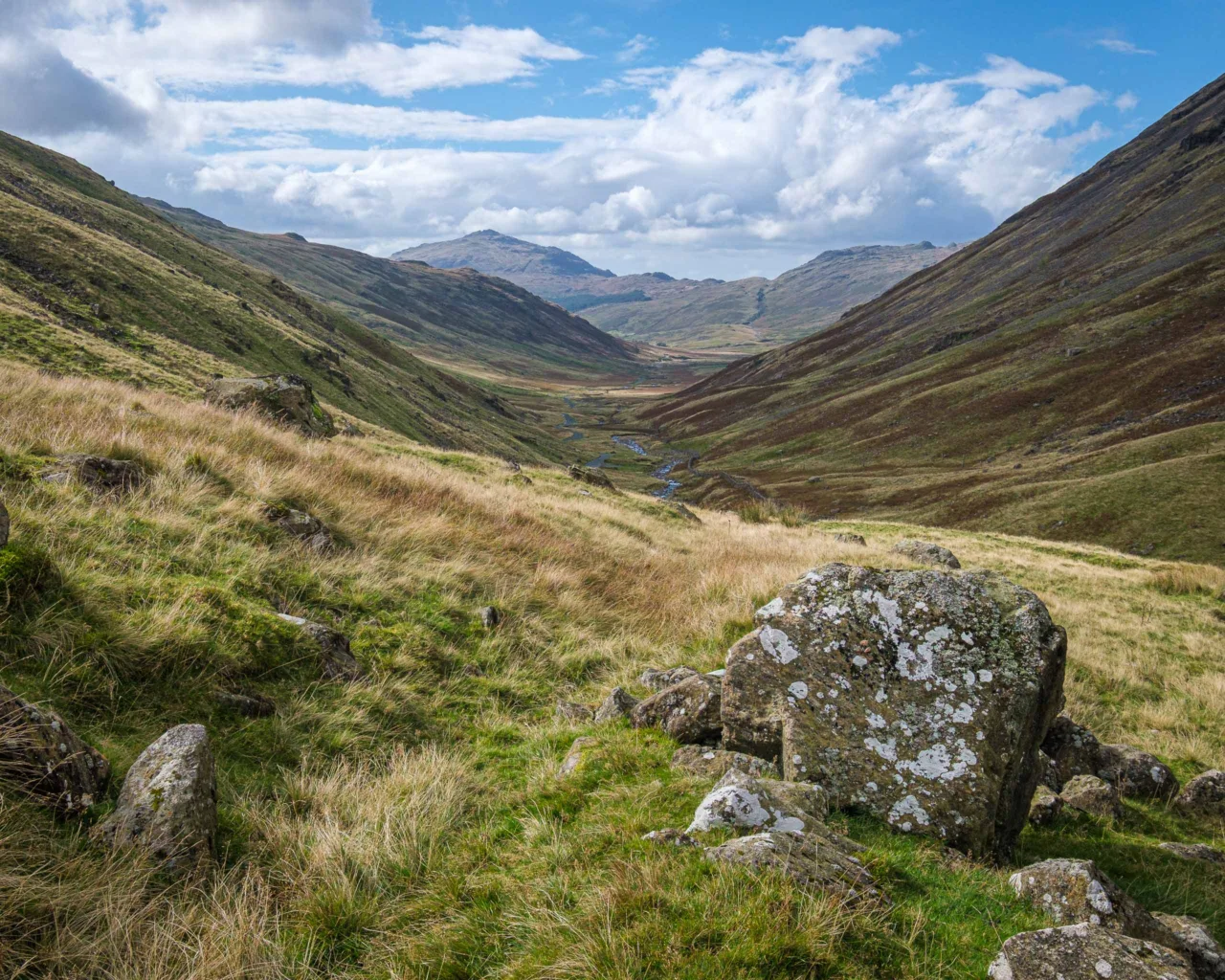
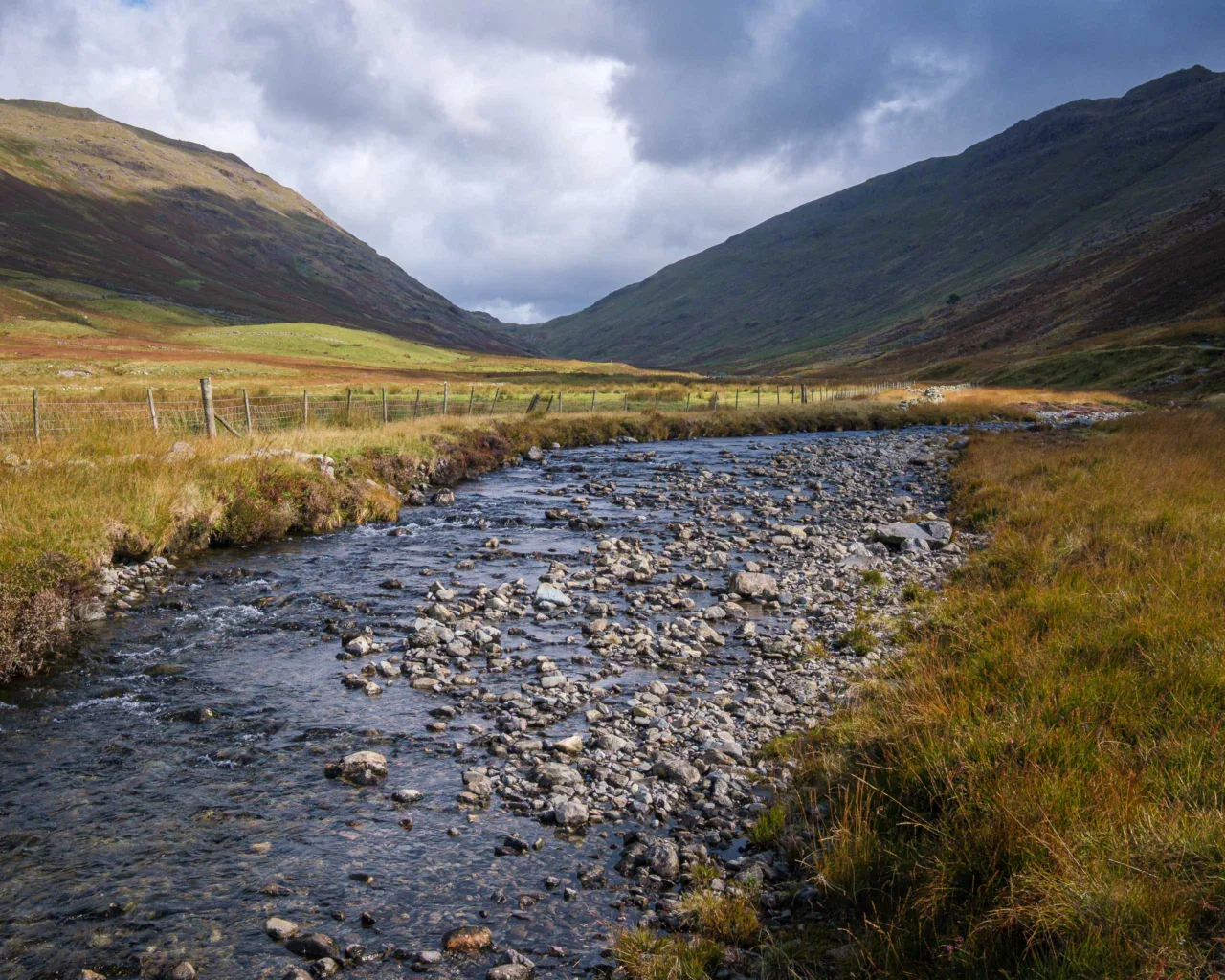
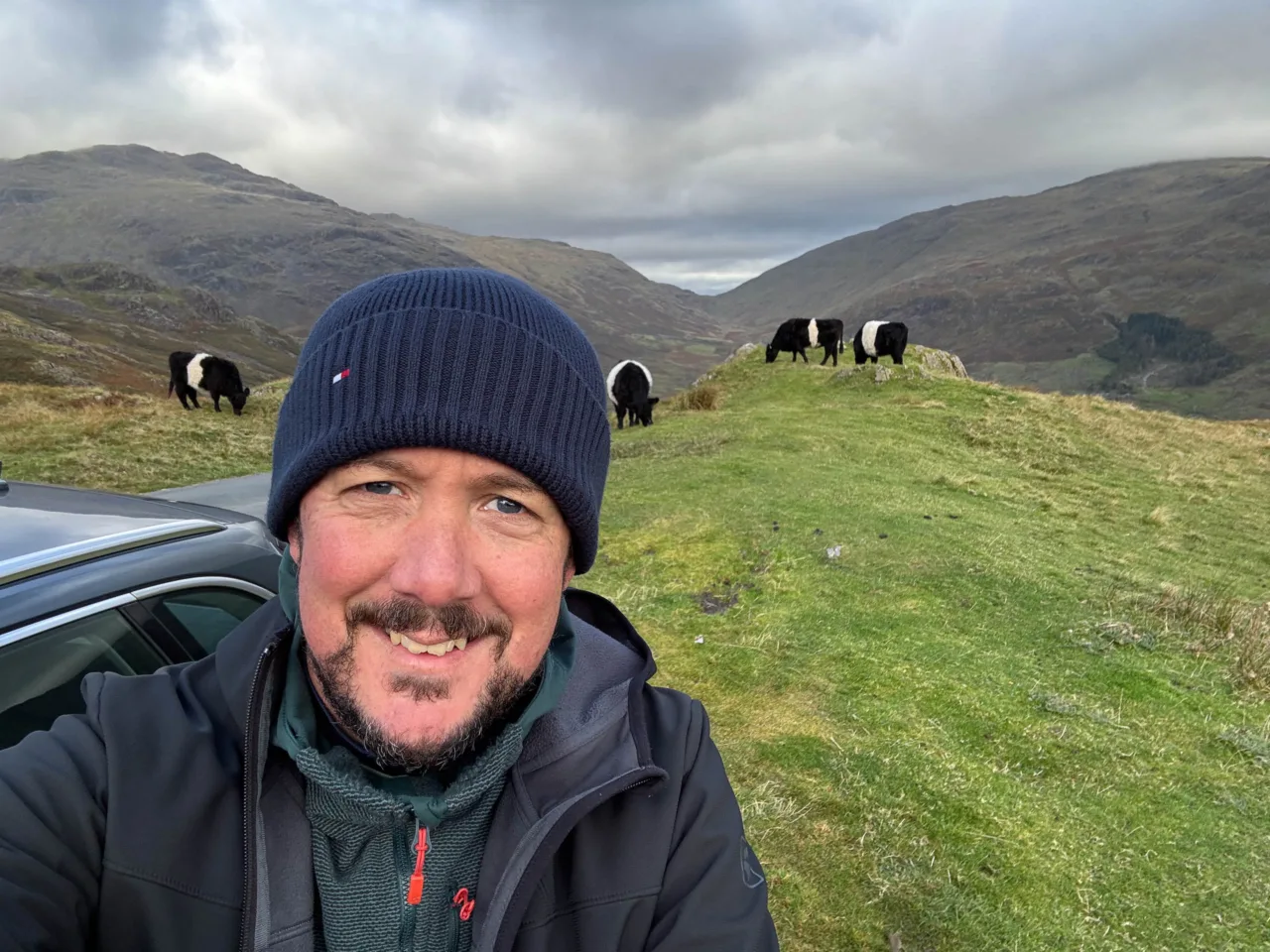
I parked at the top of the Hardknott Pass, where there are a couple of small lay-bys where you can usually leave a car during off-season without blocking passing traffic. Belted Galloway cattle watched me as I wrapped myself in wind- and waterproof gear and began making my way up the slippery path towards the summit of the fell which gives the pass its name.
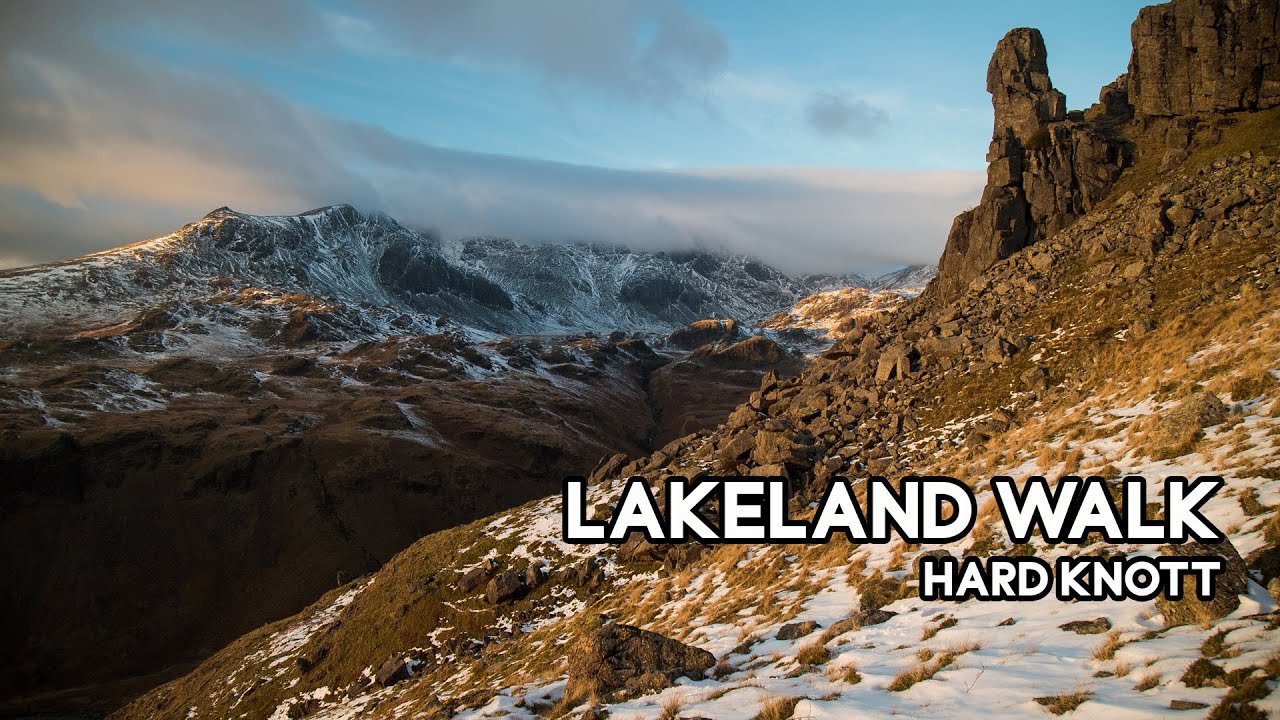
Despite having visited this area for around 30 years now, I’d never been to the top of this fell or seen the view from its summit. A YouTube video by English photographer Stuart McGlennon had inspired me to go and see the nearby “Eskdale Needle”: a rock stack set in a very photogenic spot, with the mass of Scafell Pike and the surrounding mountains behind it when viewed from this side.
The path was as squelchy and muddy as many Lakeland routes are in autumn and winter, so I was glad to be wearing my sturdy leather hiking boots and slightly thicker hiking socks than usual. As it turned out, it wasn’t the temperature that posed the biggest challenge, but the wind. Walking up the lee of the fell wasn’t too bad, but the higher I climbed, the stronger the wind surged. By the time I reached the summit, I was grateful for my walking pole to steady my steps, and for the fact that the felltop is comparatively flat and therefore safe.
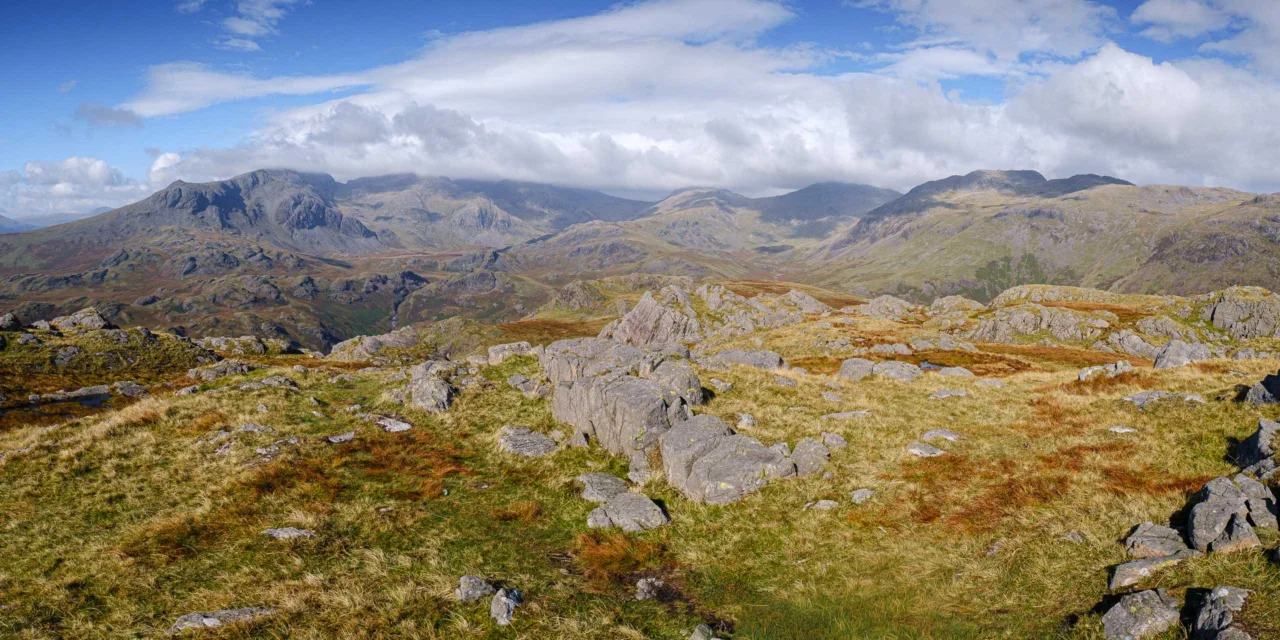
Although I had my tripod with me, the wind was too strong to keep it steady, so I didn’t bother using it. Instead, I chose to handhold my camera and wait for the right moments as the scudding clouds alternately lit and cast the landscape into shade.
After reaching the summit via the path and getting my shots there, I headed away from the path and diagonally across the tufted landscape to find the view I’d come to see. Finding a suitably flat rock on which to sit, I took a range of photographs in the wind and enjoyed my lunch, capturing several images in different lighting conditions to make sure I got just the right shot.
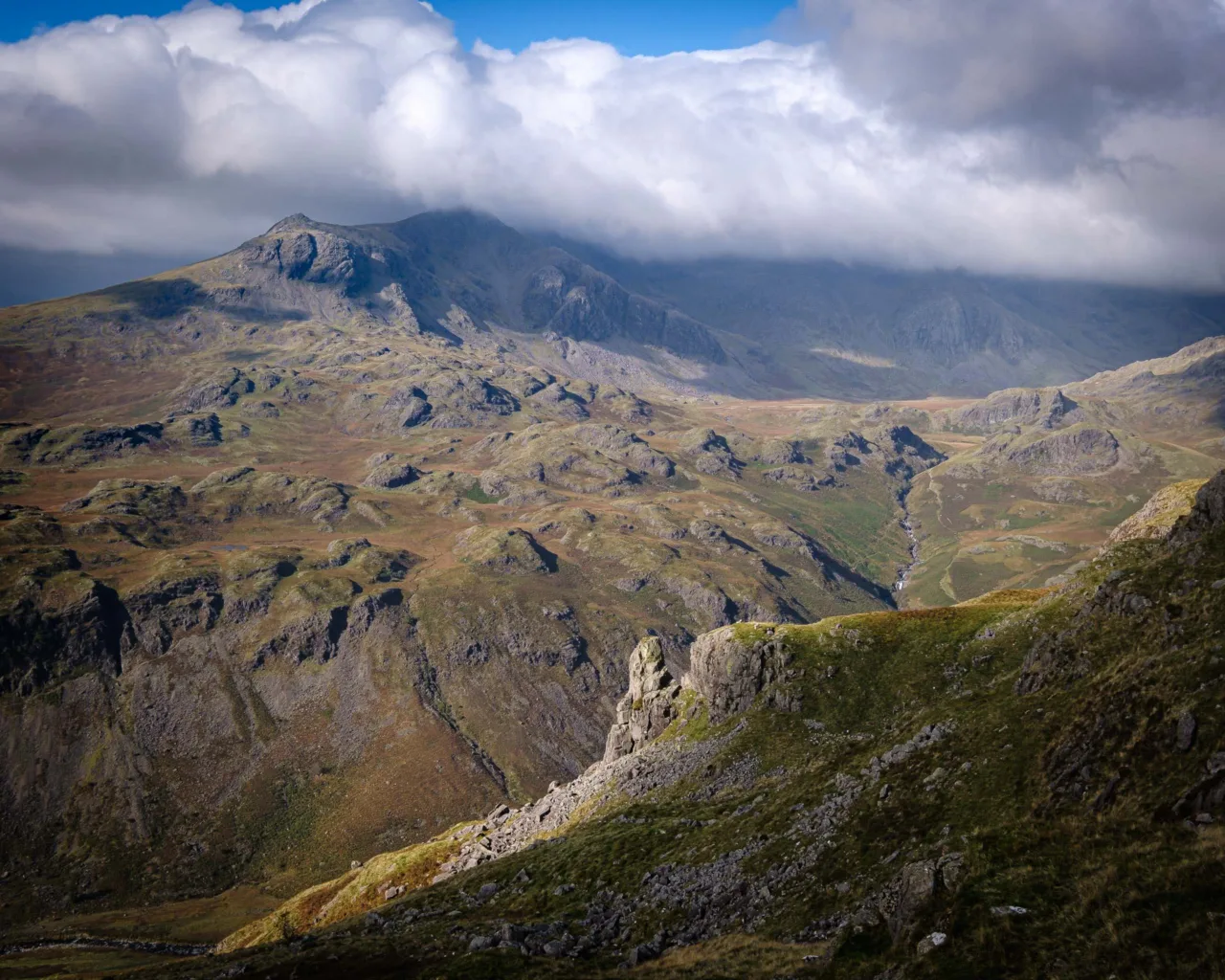
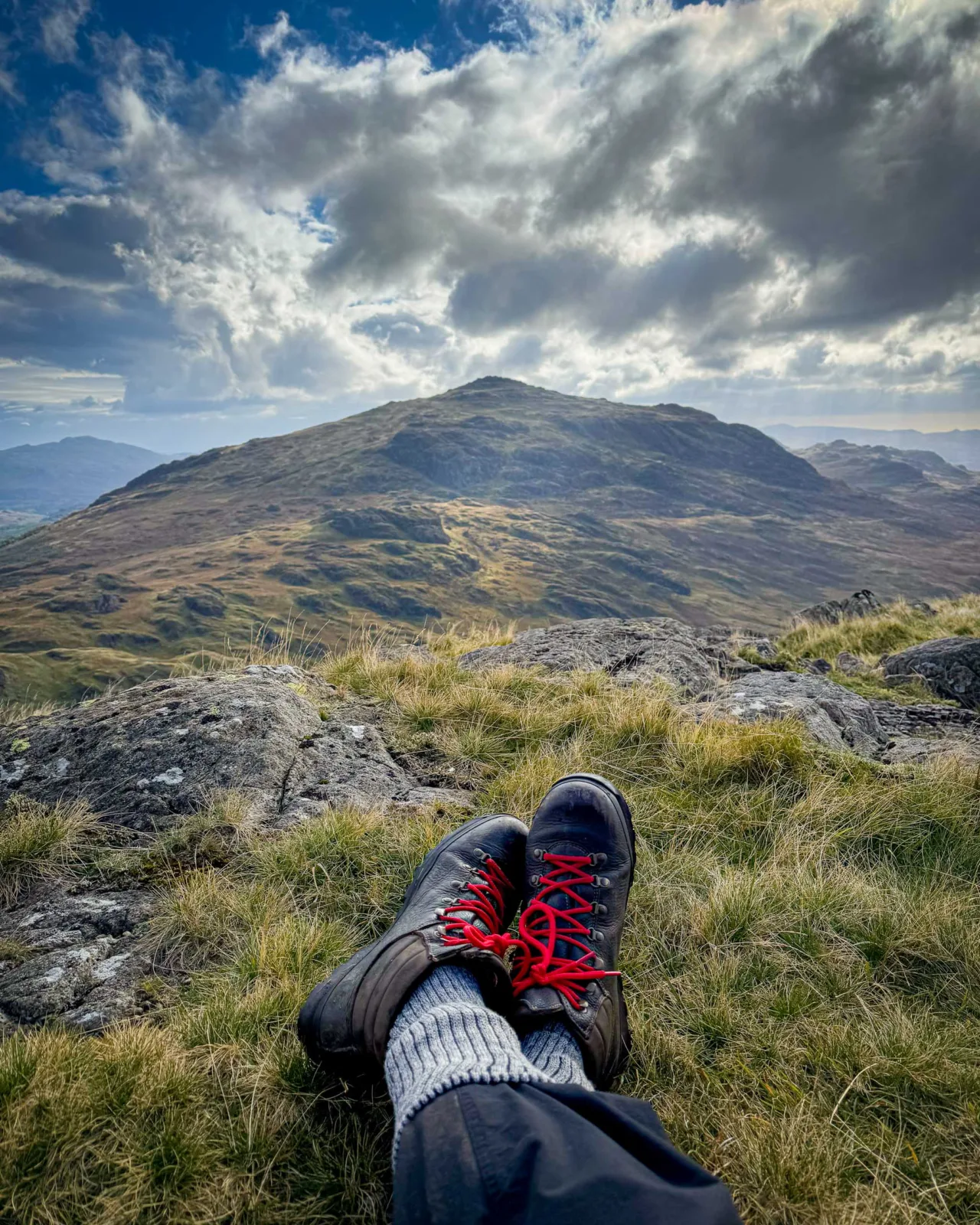
From there, I headed back towards the pass road, but instead of returning directly to the car, I visited a nearby summit called Border End. Thankfully, I found a large rock several feet high with a flat side facing leeward, which sheltered me from the wind and allowed me to hunker down for a while and enjoy a calm, mindful, and deeply relaxing quarter of an hour. I did nothing but look out across the landscape to the Irish Sea and reflect on how lucky I am to keep returning to a region I’ve loved for so many years. Little did I know on one of my first visits, when I slept in the passenger seat of a friend’s parent’s car in the Langdale valley, that this place would speak to me so deeply so many years later.
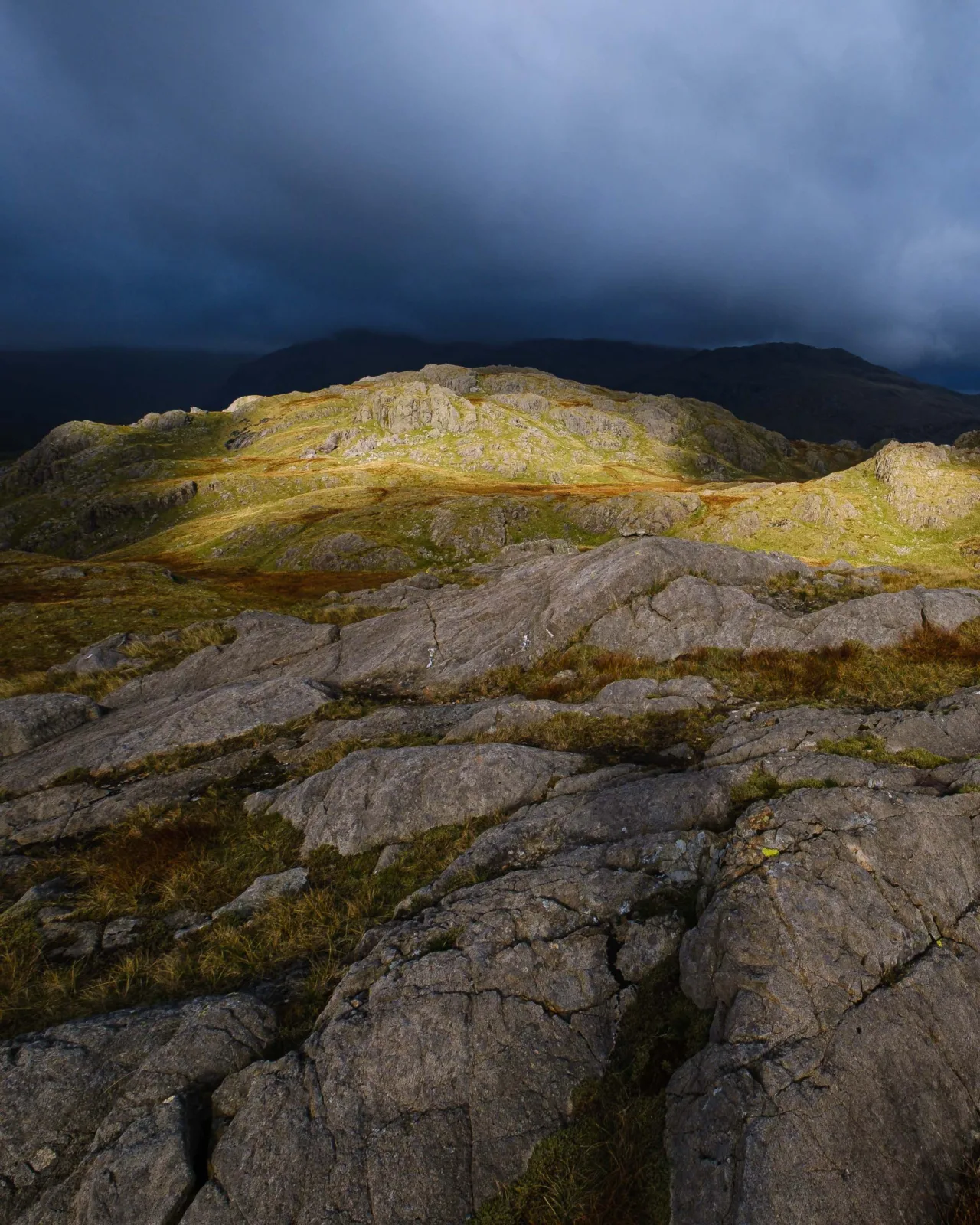
As I eventually started to walk back to the car, with clouds scudding and the light gradually fading, I was blessed with an extremely fortunate gap in the clouds which briefly illuminated the felltop. I quickly unpacked my camera again and grabbed a photograph of the light in the gathering darkness.
Realising it wouldn’t get any better than that, I returned to the car, shooed away the cattle which had decided to gather around it for some reason, changed back into softer shoes, and headed back to the holiday cottage.
Footnote
Just before I published this post in early 2026, cinematographer Terry Abraham published a short film in which his friend and collaborator David Powell-Thompson walks to the summit and back from lower down the Eskdale valley.